
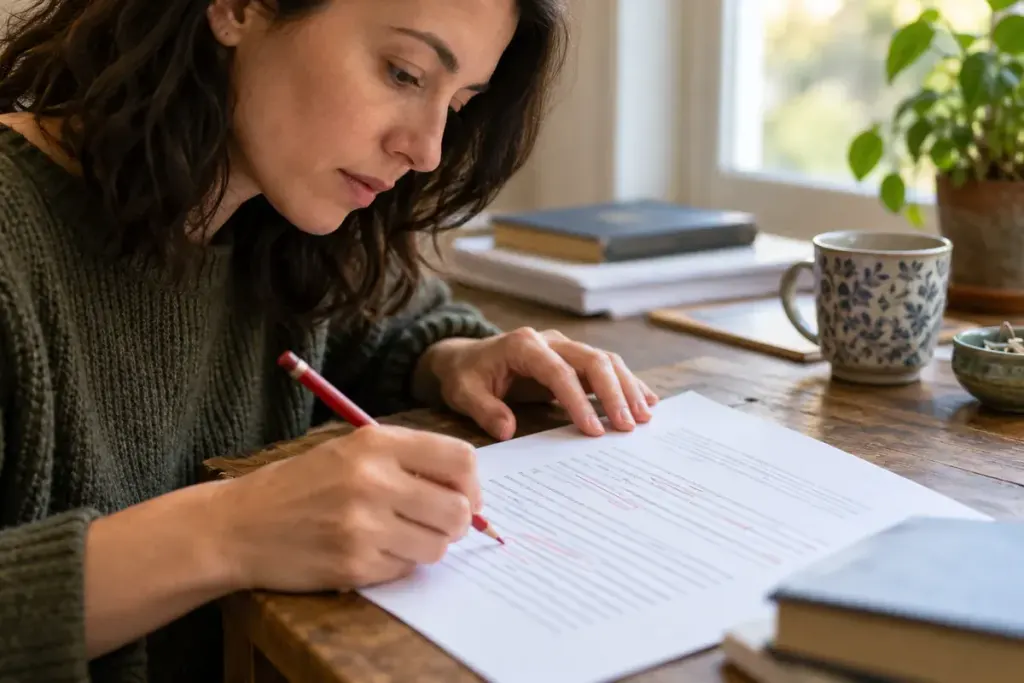
A sentence can be beautiful and still interrupt its paragraph. It can also look expendable while quietly establishing the location or connecting two ideas. Before cutting a favourite line, identify the job it currently performs.
Give the sentence a plain description
Write a short label beside it: supplies evidence, establishes time, changes the mood, explains a term, or repeats a point. Avoid “good writing” as the label; that describes your reaction rather than its function.
In an invented scene, “The cups stood like little white verdicts” may create an uneasy mood. If the surrounding paragraph is explaining where a visitor should put a tray, the image might also delay a practical action. Both observations can be true.
Read across the gap
Copy the paragraph and remove the sentence in the copy. Read the line before it directly into the line after it. Does a necessary reference disappear? Does the pace improve? If the sentence carries two jobs, try preserving the essential one in a simpler form rather than treating keep and delete as the only options.
Save a displaced line in a separate file if that makes experimentation easier, but do not promise it a future home. Another passage must need it on its own terms. The final test is what the current reader gains: a clearer action, a more deliberate pause or an image that now arrives where it can matter. Your attachment is useful evidence about effort, not the only evidence about placement.
AI-generated editorial illustration; not a documentary photograph.