
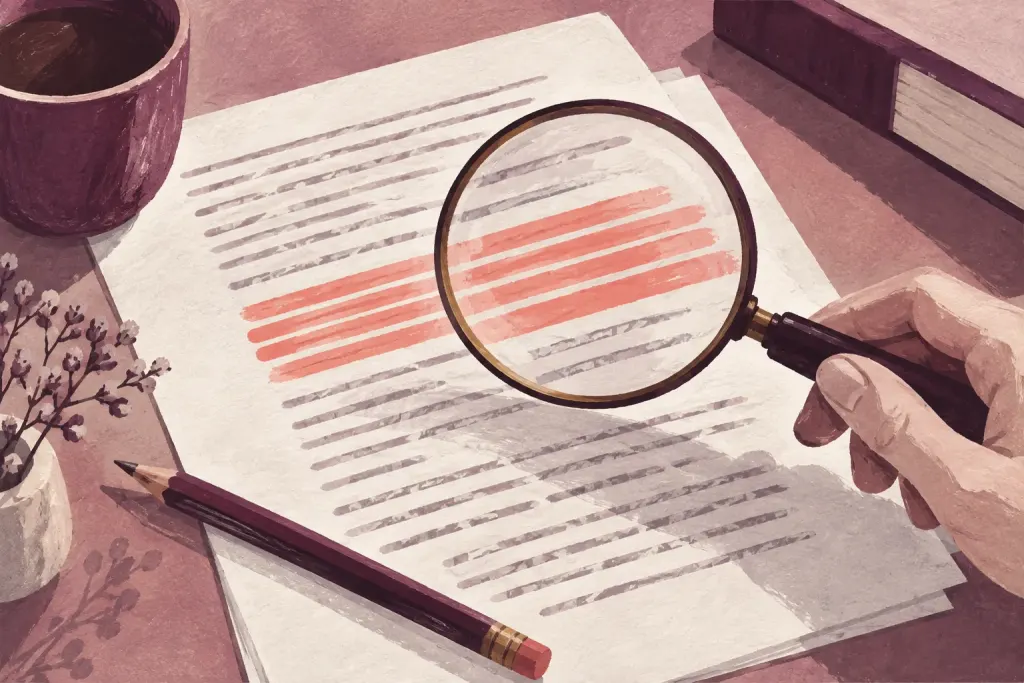
“What do you think?” sounds generous, but it asks a reader to guess what kind of help you need. One person corrects commas while you are still deciding the argument. Another rewrites your voice when you wanted to know whether the ending made sense.
A short feedback request can make the exchange easier for both of you.
Tell the reader what stage the draft is in
Explain whether you are exploring an idea, testing structure or preparing a nearly finished piece. You can say, “I am still moving sections, so line edits would be premature.” This directs attention without preventing the reader from mentioning a serious clarity problem.
Give the intended audience and the piece’s purpose in ordinary language. A local newsletter and a specialist essay need different amounts of background.
Ask about an experience the reader can report
Try “Where did you first understand the central question?” or “Which paragraph made you stop to work out what I meant?” These invite observations about reading. “How do I fix the middle?” asks the reader to solve a writing problem before describing it.
Limit the request to two or three questions. An exhaustive questionnaire can make a short draft feel like an unpaid editing project.
Keep diagnosis separate from the proposed repair
If a reader suggests deleting a scene, ask what prompted the suggestion. Perhaps the scene repeats information, interrupts momentum or introduces a person too late. You may solve the underlying problem with a different change.
Do not debate every response as it arrives. Record the point, clarify anything unclear and decide later which suggestions serve the piece.
Make a small revision plan
After receiving feedback, choose the two changes most likely to improve the reader’s experience. Note one question you still need to test. This prevents the next draft from becoming a collection of disconnected fixes.
Thank the reader and, where useful, explain what their observation helped you see. Then return to the larger questions in our revision-before-proofreading guide. Feedback works best as evidence for your decisions, not as a vote that transfers responsibility for the writing.