
Words such as “furthermore” and “however” can make a draft sound connected while leaving its reasoning unclear. Before changing the transition, name the relationship you want it to express.
Read two neighbouring paragraphs and write a private label between them: example, consequence, exception, contrast or new question. If none fits, the paragraphs may need rearranging rather than a smoother opening phrase.
Name the connection before choosing the phrase
Consider an invented pair: one paragraph describes a crowded desk; the next explains why a writer keeps a clear patch beside the keyboard. The relationship is a practical response to the problem. A sentence naming that response will usually help more than a generic “in addition.”
Try removing the transition entirely. If the relationship remains obvious, you may need no replacement. If it becomes confusing, add the smallest phrase that identifies what changed in the argument.
Watch for false contrasts. “However” promises a meaningful turn; it should not merely introduce another compatible detail. Equally, “therefore” requires more than two events occurring in sequence.
Finish by reading the paragraph openings alone. They should reveal the route through the piece without pretending that every step is a dramatic reversal. Good transitions make the reasoning available; they do not decorate a gap the draft has not resolved.
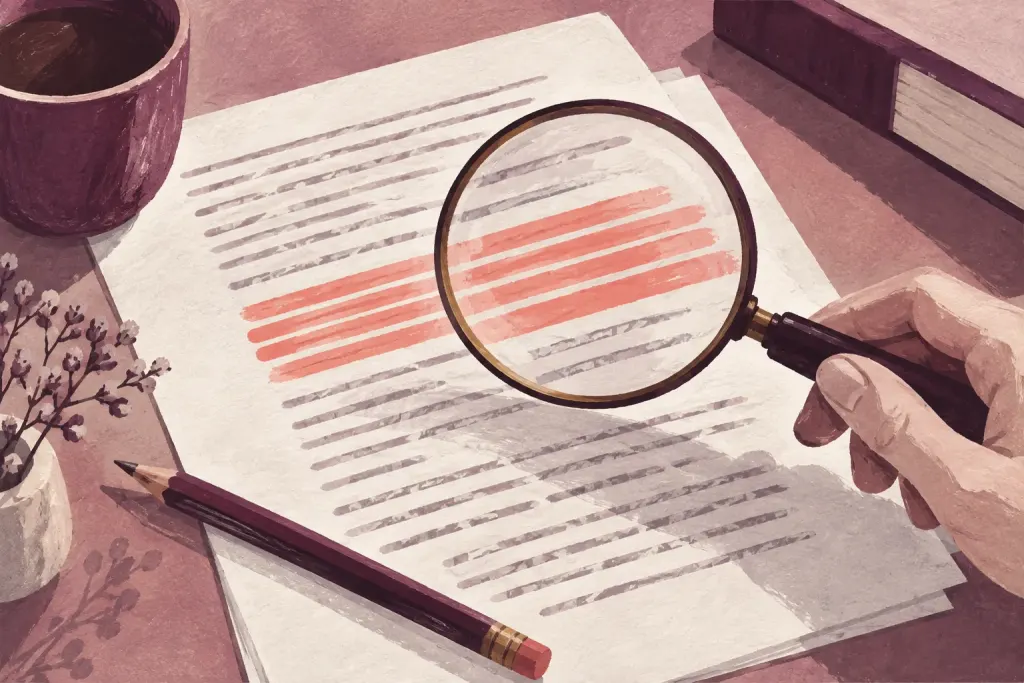
Image: an editorial illustration, not a documentary photograph.