
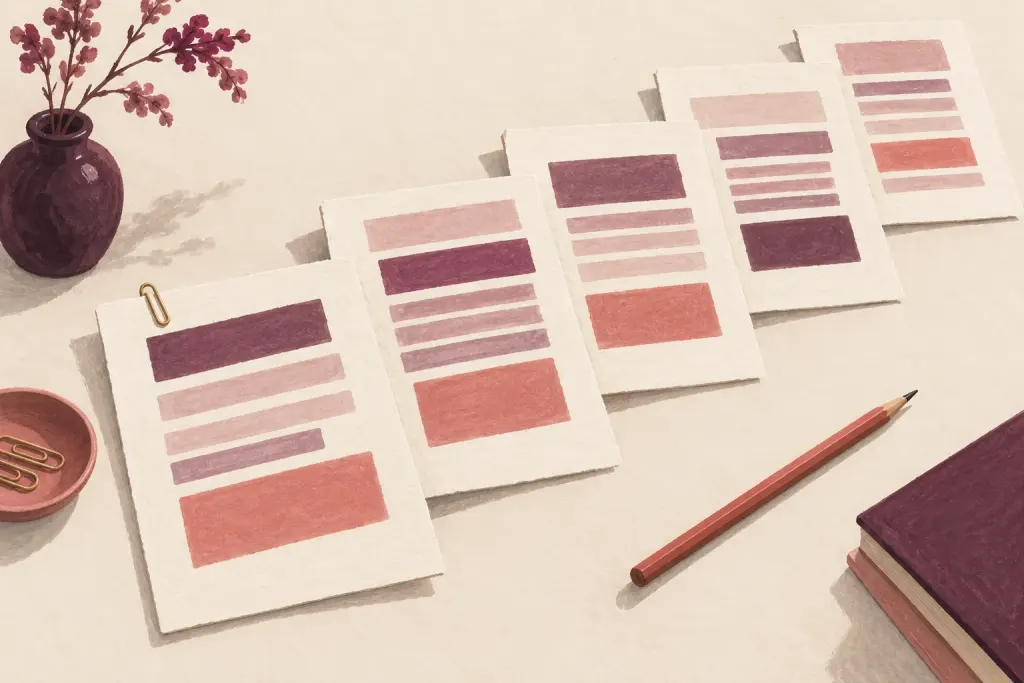
You began with a plan to write about a neighbourhood garden. Four pages later, the draft spends most of its time on the people who meet there. The original outline still looks tidy, but it no longer describes the piece. That is a useful moment to outline what you actually wrote.
The University of Wisconsin–Madison Writing Center calls this a reverse outline: identify the main idea of each paragraph after drafting. Seeing those ideas together can reveal gaps, repetition and problems with order. The exercise describes the existing text, even when it differs from your first intention.
Give each paragraph an honest label
Read one paragraph at a time and write a short label beside it. If a paragraph wanders across three subjects, resist making a neat label that hides the wandering. Note the competing subjects instead. That observation may matter more than finding a perfect phrase.
Here is an invented mini-outline for the garden piece: arrival at the gate; history of the plot; a conversation about spare seedlings; another history paragraph; neighbours sharing tools. Reading only those labels, you might wonder whether the two history sections belong together. You might also decide that sharing, rather than gardening technique, is the piece’s strongest thread.
Try a move before polishing the sentences
On a separate copy of the draft, place the two history sections next to one another. Read the paragraphs on either side of the move. Does the new arrangement help the reader understand why the conversation matters, or does it interrupt the scene? The outline suggests a question; the full prose supplies the test.
You can also add a note for a missing connection. Perhaps a paragraph assumes the reader already knows who manages the garden. A brief explanation may do more work than another descriptive sentence.
Keep the first version until you have compared them. There is no requirement to rearrange a draft just because the exercise produces a list. If the sequence already serves the piece, the outline has still helped you see why. For another pass, explore the difference between revision and proofreading.
Method reference: the University of Wisconsin–Madison Writing Center’s guide to reverse outlines. The garden example is an original illustration.